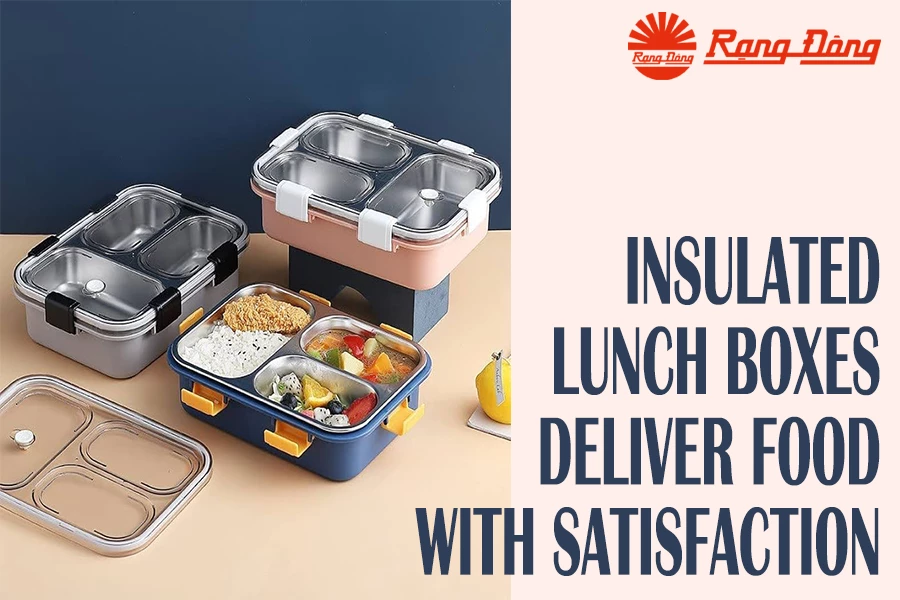
Lunchbox Classification and Tips for Choosing Right Model
The food container market has been expanding rapidly, offering a wide range of designs and functions that suit different lifestyles. By understanding the lunchbox classification, users can find the type that matches their needs, whether they prioritize portability, insulation, heating capability or long-term safety. Let’s discover the most popular lunchbox types in the following article.
Plastic lunchbox
This is one of the most widely used options thanks to their affordability and lightweight structure. These boxes come in various designs, including single-tier, multi-compartment layouts or stacked containers connected by clips.
Prices range typically between VND 50,000-300,000 (USD 1.9-11.4), while mid-range products of VND 150,000 (USD 5.7) often provide better safety and durability.

Advantages
Extremely lightweight, making them easy to carry along.
Available in many colors, shapes and layouts.
Usually the most affordable among lunchbox types.
Disadvantages
No insulation capability, functioning only as basic storage.
Easily absorbs odors and may become difficult to clean over time.
Low-quality plastic may stain, warp, or be unsafe for hot foods.
Insulated lunchbox
These boxes function similarly to thermos bottles, keeping food warm for several hours without the need for electricity. Depending on the model, heat retention can range from 4 to 12 hours.
Their structure typically includes an outer shell made from plastic or stainless steel, an insulating layer, and an inner core often made from food-grade stainless steel such as 304 or 316.
The market price varies significantly from VND 300,000 to 2.5 million (USD 11.4-95). 
Advantages
Compact and convenient for office workers, helping maintain temperature for a more pleasant meal.
Available in diverse designs and price ranges.
Hygienic and comparatively easy to clean.
Economical in the long term compared to daily dining outside.
Disadvantages
Once the heat retention period is over, food will cool as normal.
Low-quality models may use poor insulation materials, reducing performance and safety.
Electric lunchbox
This type of lunch boxes offers the most advanced functionality in lunch box classification. They not only reheat meals, but can also be used for cooking simple dishes. Using steam-based heating, they can warm food in 5–10 minutes and cook rice or soups in 30–40 minutes.
These containers typically include two or more layers: one for water heating and others for food trays. When choosing this type, customers should prioritize heat-resistant materials such as PP plastic, 304 or 316 stainless steel.
Prices range widely from VND 100,000 to 1.5 million (USD 38-57), but the cheap options may contain unsafe components, including BPA or inferior plastic that melts over time.

Advantages
Saves time for office workers with the ability to cook or reheat meals.
Compact and suitable for daily use.
Reduces long-term lunch expenses.
Disadvantages
Water must be kept off the electrical base during cleaning.
Caution required when opening to prevent steam burns.
Glass lunchbox
This type offers excellent heat resistance and retain food flavors effectively, making them ideal for reheating. Their smooth, non-porous surface prevents stains and odors, supporting long-term hygiene.
Many designs include airtight lids, helping maintain food freshness for hours.
However, glass lunch boxes are heavier than other materials, which can reduce portability. They are also more prone to breaking if dropped or exposed to sudden temperature changes.

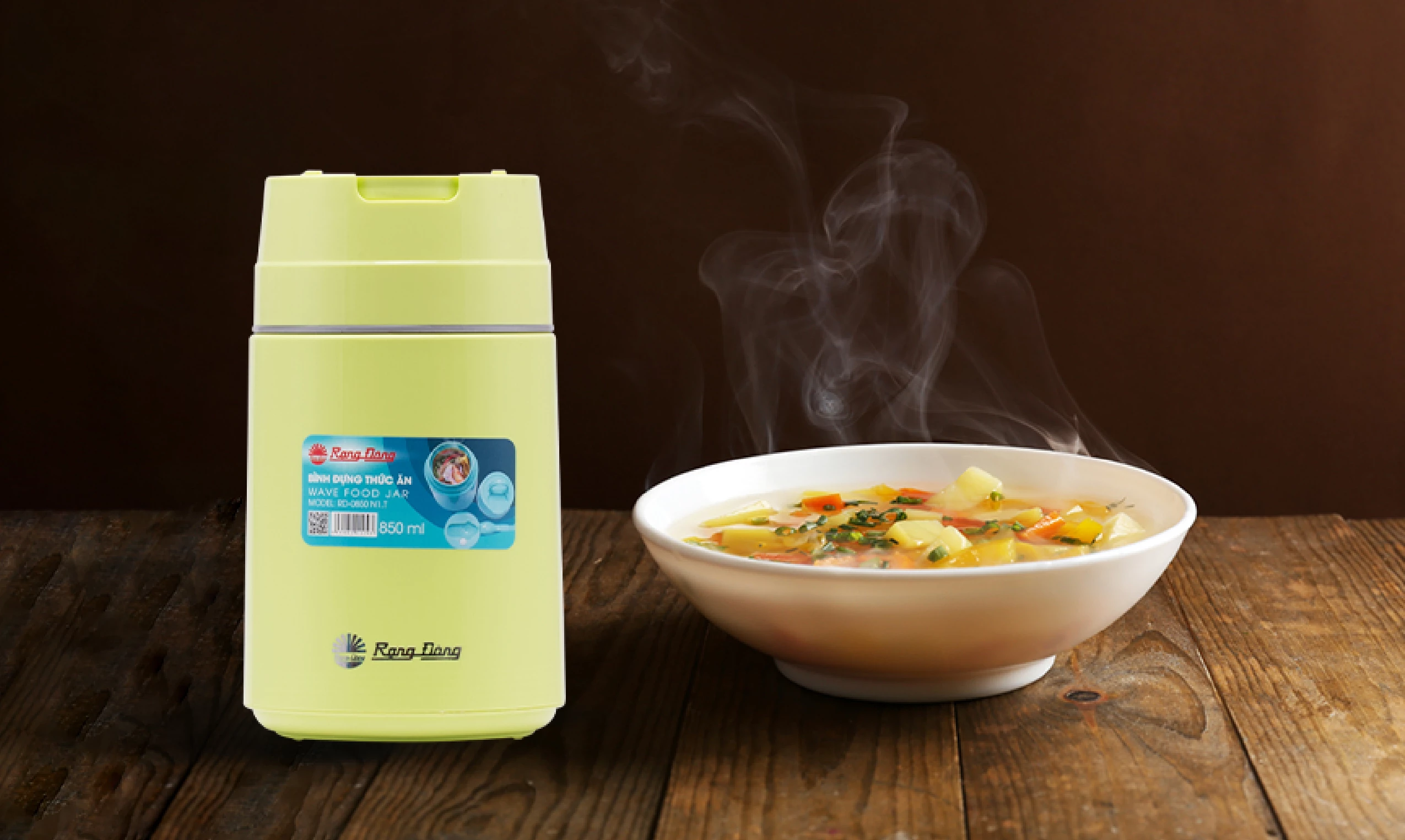
Rang Dong, Vietnam’s leading manufacturer of vacuum flask products, offers high-quality thermal food jars rather than multi-compartment bento boxes.
The company’s products focus on insulation efficiency, food safety and convenience. Each container features a glass inner core, ensuring no metallic taste and maintaining food quality, while the PP plastic outer shell keeps the product lightweight and safe for daily handling.
The vacuum structure between the layers provides strong heat retention, allowing food to stay hot for up to 12 hours, and cold for up to 24 hours depending on the model.
Should you have any questions or request a quotation of Rang Dong products, please send us an email to: export@rangdong.com.vn
Websites: en.rangdong.com.vn and vacuumflask.rangdong.com.vn.
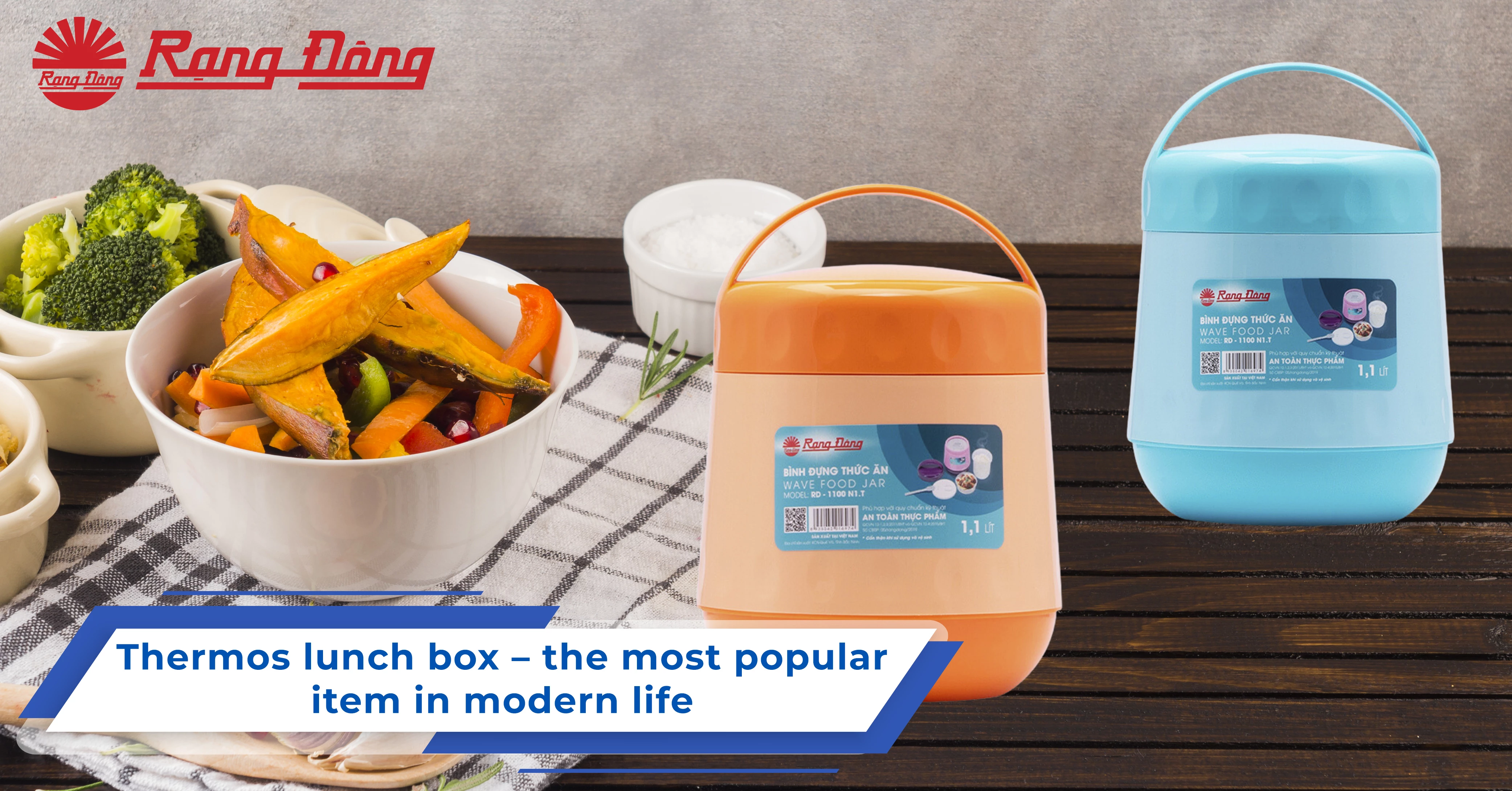
Work and life pressure often leads us to choose the most convenient items for a better life. The thermos lunch box must be the ideal choice for students and office staff as it helps store hot food for half a day, giving us a chance to enjoy a good lunch prepared in the morning. Let's take a closer look at this item in the following article.
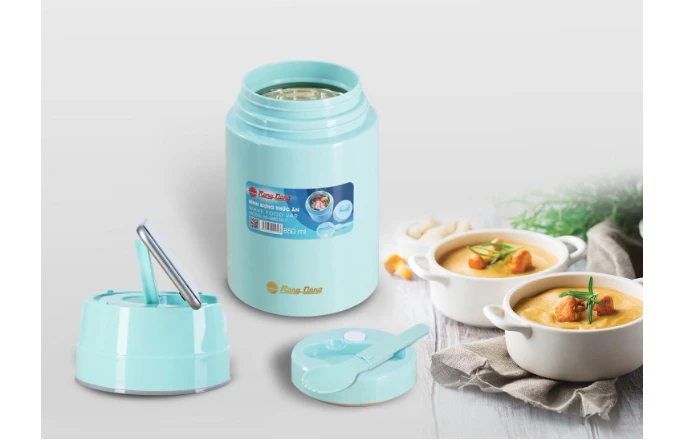
Office staff, workers, and students all need a hot and delicious lunch within reach. The thermos food jar produced by Vietnam's Rang Dong satisfies all the needs as it preserves the flavor and freshness of the meal from the start of the morning to noon time. The key differences between this food container and its peers are its secure structure, simple use, and compact size with exquisite colors. Let's check out the product here.
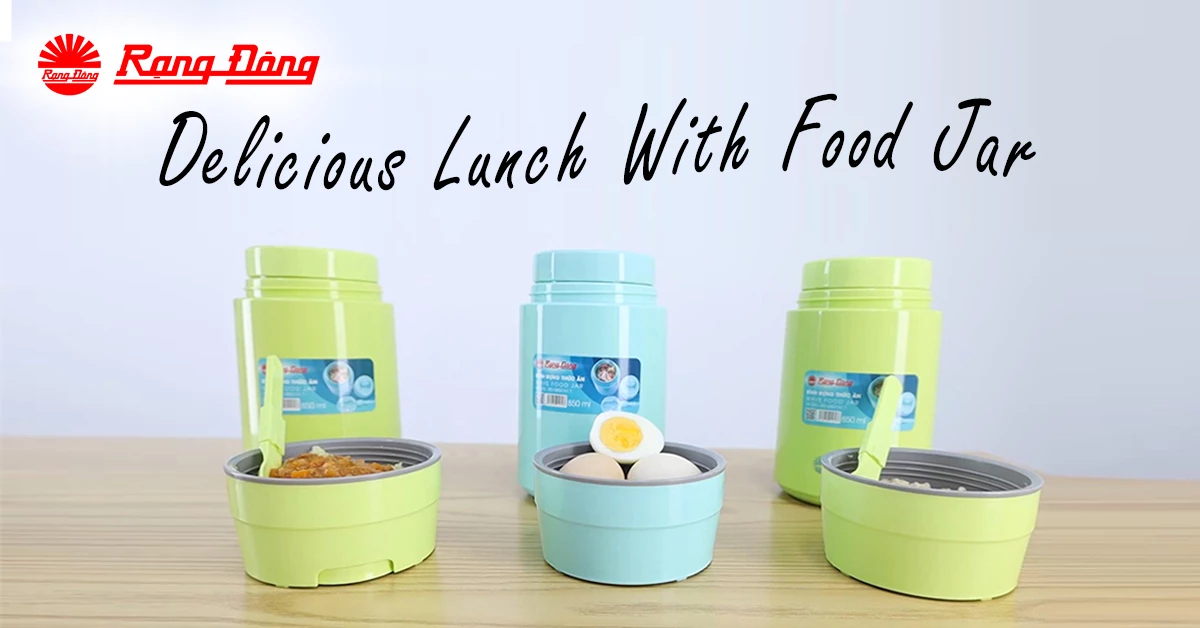
Even in the warm weather, it's great to have a hot lunch at work. However, many workplaces do not have microwaves or are overloaded that makes it impossible to use the hot lunch option. So a thermos food jar is extremely convenient. The following easy recipes can be useful, with help from a Rang Dong thermos food jar. Let’s start!
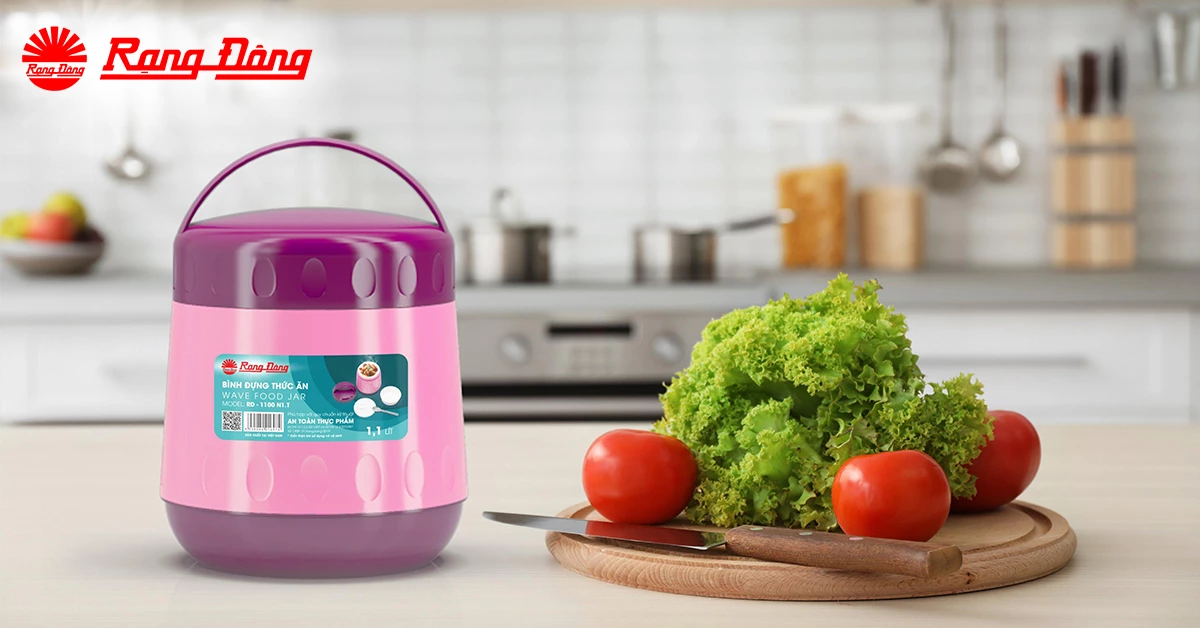
Lunch is very important as a good lunch provides energy for afternoon activities. In order to assist people who can’t find time to cook or are not able to heat the food because a microwave is absent at work, Rang Dong has created this vacuum lunch box to serve the best lunch. Let’s find out more about Rang Dong brand new food jar in the following article.